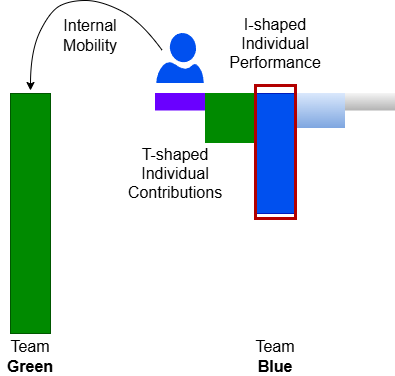
T-shaped Skills
We won’t repeat but enough has been said about T-shaped skills as well as their `π` and `m` shaped extensions.
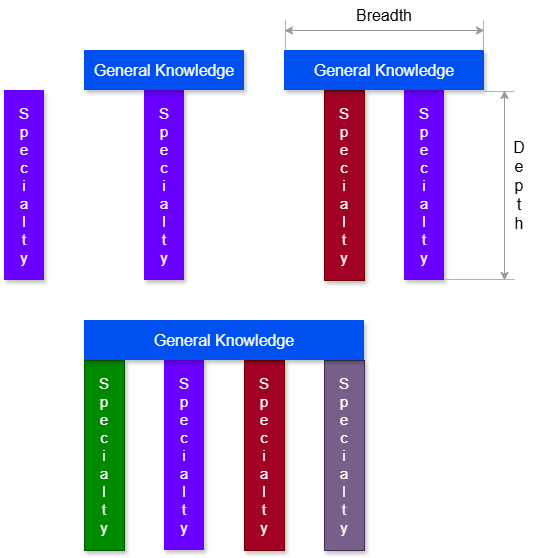
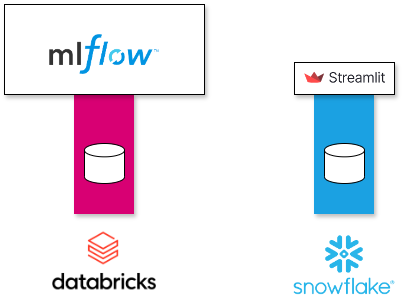
Sticking with the `T` shape, each individual or institution’s collective competencies constitute their T-shape with unique breadth and depth offerings. Take database vendor DataBricks and SnowFlake for example:
- The two are roughly equal in their specialty: database.
- Databricks has pretty deep offering in its breadth business: machine learning platform.
- Snowflake has a shallow offering in its breadth business: Pythonian web app framework
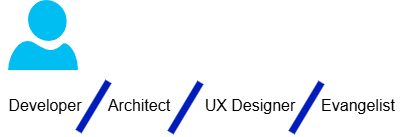
Slash Professionals
The other way to indicate those professionals with multi-disciplinary domain knowledge and skills is Slash Professionals.
RACI Framework
In multi-team collaboration projects where efforts among many stake-holders needs to be orchestrated, clearly designating:
- Who is responsible (doing the work)
- Who is accountable (owning, quality control and signing off the work)
- Who needs to be consulted (inbound upstream dependency), and
- Who needs to be informed (outbound downstream dependency)
has been proven to be a crucial factor to project success. So crucial that it got its own four-letter abbreviation: RACI Framework.
T-shaped RACI impact model
Arranging RACI into a T-shape can explain and remedy many common corporation ills.
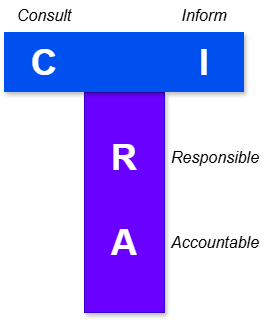
In above arrangement:
- The vertical stroke of the T represents a team or individual’s core impacts, the stuff the individual or team is responsible to build and held accountable for its quality.
- The horizontal stroke of the T represents a team or individual’s general impacts, the consultative service or knowledge the individual or team may provide or inform
Scope Creep
When a team is chartered to build A yet it spends its cycles building Z, the team commits the crime of scope creep.
The motivations for scope creep may vary:
- Z is hyped
- Z enjoys more visibility among higher managment
- Z is the team leader’s personal interest
- …
But the harms of scope creep are the same:
- Roadmap Deviation. Team capacity is a fixed-sum game. The more efforts diverted to Z, the less efforts spent on A.
- Duplication. If Z is hyped, many teams scope creep to build Z, resulting in many copies of Z.
- Politics. Our Z is better than your Z. Your team is not competent enough to build Z… Political fights abound…
- …
Wild Goose Chase
Same reasoning applies to individual contributors (IC). When an IC is tasked to do A yet she spent her energy on X, Y, and Z. She commits the crime of wild goose chase.
I-shaped Performance Review
How to arrest the rampant scope creep and wild goose chase in corporations? I propose the somehow counter-intuitive I-shaped Performance Review:
- Performance of an individual or team (via the team leader) is solely based on the vertical “Responsibility” and “Accountability” assigned.
- Horizontal contributions outside of the vertical `I` don’t count
- This way individuals and teams are forced to prioritize what they need to do, not what they want to do.